Atlantic Advantage: How Canada's East Coast Ports Are Quietly Reshaping Import Strategy in 2025
The West Coast Default Is No Longer a Given
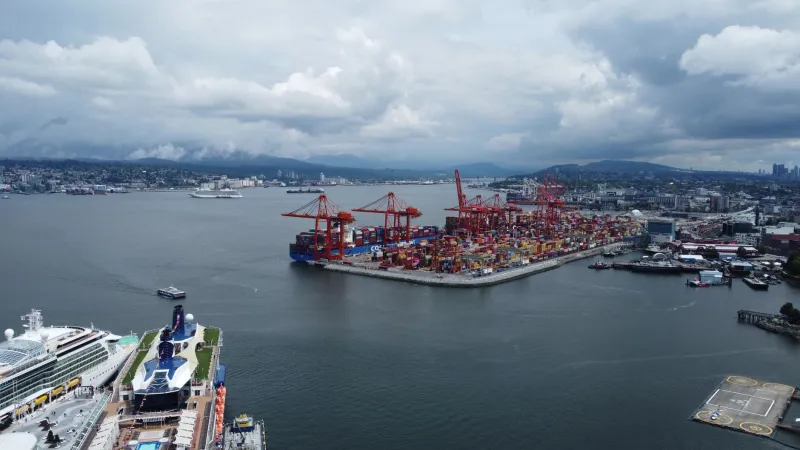
For decades, the default routing for Canadian importers bringing goods from Asia was straightforward: load containers onto a vessel bound for Vancouver or Prince Rupert, then move freight eastward by rail or truck. It was familiar, carrier-supported, and operationally predictable — until it wasn't.
The compounding pressures of the past several years — labour disruptions at B.C. ports, chronic yard congestion, extended dwell times, and the added complexity introduced by U.S. tariff policy — have prompted a meaningful reassessment of that default. In 2025, a growing cohort of Canadian importers is looking east, not west, when mapping their ocean freight strategy. And what they are finding at Halifax and Montreal may surprise them.
What Halifax and Montreal Actually Offer
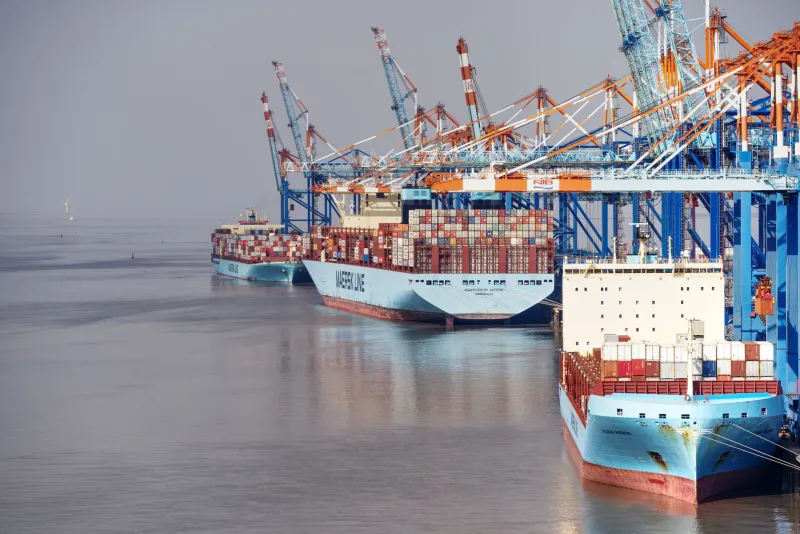
The Port of Halifax sits at a geographical advantage that is frequently underappreciated. As one of the deepest natural harbours on the North American east coast, it is capable of accommodating ultra-large container vessels without the draft restrictions that limit some competing ports. More importantly, Halifax is geographically closer to European and transatlantic shipping lanes, which translates directly into shorter voyage times for cargo originating from Northern Europe, the United Kingdom, the Mediterranean, and West Africa.
For importers sourcing from these regions — whether it is finished goods from Germany, textiles from Portugal, or agricultural inputs from Morocco — routing through Halifax rather than transshipping through a U.S. hub port can eliminate an entire leg from the supply chain.
Montreal, meanwhile, occupies a different but equally compelling position. As the largest inland port in Canada and the furthest inland port accessible to ocean-going vessels in North America, it delivers cargo directly into the heart of Central Canada without requiring transshipment or additional rail movement. For businesses serving Ontario and Quebec markets — which together account for the majority of Canadian economic activity — Montreal represents a last-mile efficiency that few west coast routes can replicate.
Transit Times: Rethinking the Numbers
One of the persistent misconceptions about east coast routing is that it adds time. For certain trade lanes, the opposite is true.
Consider a shipment originating in Rotterdam. A vessel calling Halifax directly can complete the transatlantic crossing in approximately seven to nine days. A comparable shipment routed through Vancouver from Asia, with European origin, may involve a transshipment through a hub port and additional inland transit before reaching a Central Canadian distribution centre — a journey that can extend the total supply chain by two to three weeks.
Even for Asia-origin freight, the calculus is shifting. Post-Suez Canal routing via the Cape of Good Hope, which became more prevalent following Red Sea security concerns in 2024, has meaningfully altered transit time comparisons between east and west coast options. Carriers that once made the Panama Canal transit to reach east coast ports are now factoring in extended sailing times that, paradoxically, make the relative difference between east and west coast arrival windows less dramatic than historical assumptions suggested.
Canadian importers who have not revisited their transit time models since 2022 may be operating on outdated assumptions.
Cost Implications: A More Complex Picture
Port costs and carrier rate dynamics on the east coast differ from those on the west coast in ways that merit careful analysis. Halifax and Montreal have historically carried lower terminal handling charges and port fees compared to Vancouver, though the gap has narrowed as east coast volumes have grown. Importers should also account for differences in rail and drayage costs when comparing total landed costs across routing options.
That said, the negotiating environment on east coast lanes is often more favourable. West Coast Canada ports, particularly Vancouver, have experienced sustained demand pressure that gives carriers less incentive to offer competitive rates or service flexibility. On east coast lanes — especially for Montreal and Halifax — shippers with consistent volume may find carriers more willing to engage on rate terms, equipment availability, and sailing frequency.
For importers who have felt squeezed by carrier leverage in recent years, diversifying routing to include Atlantic gateways can restore a degree of commercial balance to those conversations.
Congestion Risk and Supply Chain Resilience
Perhaps the most strategically significant argument for east coast routing is not efficiency or cost — it is resilience.
The 2023 labour disruption at B.C. ports served as a stark reminder of the concentration risk embedded in west coast dependency. Importers who had no alternative routing in place faced extended delays, emergency transshipment costs, and in some cases, genuine inventory shortfalls. Those with established east coast relationships were able to redirect volume with considerably less disruption.
Building Halifax or Montreal into a supply chain as a secondary — or even co-primary — gateway is not simply a routing decision. It is a risk management decision. In an era when geopolitical volatility, labour relations, and climate-related port disruptions are all increasing in frequency, the ability to pivot between gateways is a material competitive advantage.
Inland Connectivity: The Rail Factor
A common concern raised by importers considering east coast routing is inland connectivity. Can Halifax and Montreal actually move goods efficiently to western Canadian markets such as Toronto, Calgary, or Vancouver?
The answer, in most cases, is yes — though with nuance. Both CN Rail and CP Rail operate dedicated intermodal services connecting Halifax and Montreal to major inland distribution hubs across Canada. Transit times for rail freight from Halifax to Toronto run approximately three to four days; Montreal to Calgary ranges from four to six days depending on the service. These timelines are competitive with the inland rail legs associated with west coast routing, particularly when port dwell time at Vancouver is factored into the total calculation.
For businesses primarily serving Central Canadian markets, the rail argument is even more straightforward. Montreal's direct port access eliminates the rail leg entirely for many distribution scenarios.
Making the Strategic Case Internally
For logistics managers and supply chain directors at Canadian import businesses, the challenge is often not identifying the opportunity — it is building the internal business case to act on it.
The most effective approach is to begin with a focused pilot: select a specific trade lane, supplier, or product category where east coast routing offers clear advantages, and run a comparative analysis over two to three shipment cycles. Measure actual transit times, total landed costs, and service reliability against your west coast baseline. The data from a structured pilot will be far more persuasive to senior leadership than theoretical modelling.
Engaging a freight partner with established relationships at Halifax and Montreal — including knowledge of local terminal operations, customs processes, and carrier services — will significantly reduce the learning curve associated with a new routing strategy.
The Quiet Shift Is Already Underway
The movement toward east coast routing is not a future trend. It is happening now, driven by pragmatic decisions made by Canadian importers who have grown weary of west coast uncertainty. Port of Halifax container volumes have shown consistent growth over the past two years, and Montreal's throughput has benefited from increased European trade activity as Canadian businesses diversify away from Asia-only sourcing.
For importers who have not yet evaluated their east coast options, 2025 represents an opportune moment. Carrier capacity is available, terminal infrastructure is performing well, and the competitive advantages of Atlantic routing — speed, cost, resilience — are as compelling as they have ever been.
Canada's east coast ports have long been the country's underutilised trade infrastructure. For forward-thinking importers, they are becoming something else entirely: a genuine strategic asset.