Riding Out the Swells: Proven Tactics for Canadian Importers to Stabilise Ocean Freight Costs in a Volatile Market
Ocean freight rates have never been a model of stability, but the past several years have elevated volatility to an entirely new register. Canadian importers who relied on predictable spot-market pricing during the relative calm of the mid-2010s found themselves badly exposed when rates surged during pandemic-era supply chain disruptions, then collapsed, then surged again in response to Red Sea diversions and shifting carrier alliances. For finance teams and procurement managers alike, this unpredictability has become one of the most difficult line items to forecast.
The question is no longer whether rate volatility will affect your business—it will. The more productive question is how to structure your freight procurement so that market swings do not dictate your margins.
Understanding What Actually Drives the Cycles
Before any hedging strategy can be effective, importers must understand the mechanics behind rate fluctuations on Canadian trade lanes. Several forces are consistently at play.
Carrier capacity management remains the single greatest lever on the market. The major shipping alliances—now reorganised following the dissolution of the 2M partnership and the formation of new groupings in 2025—routinely deploy blank sailings to reduce effective capacity and support rate floors. When demand softens, these tactical withdrawals can slow the rate decline; when demand spikes, the same carriers are slow to restore capacity, amplifying upward pressure.
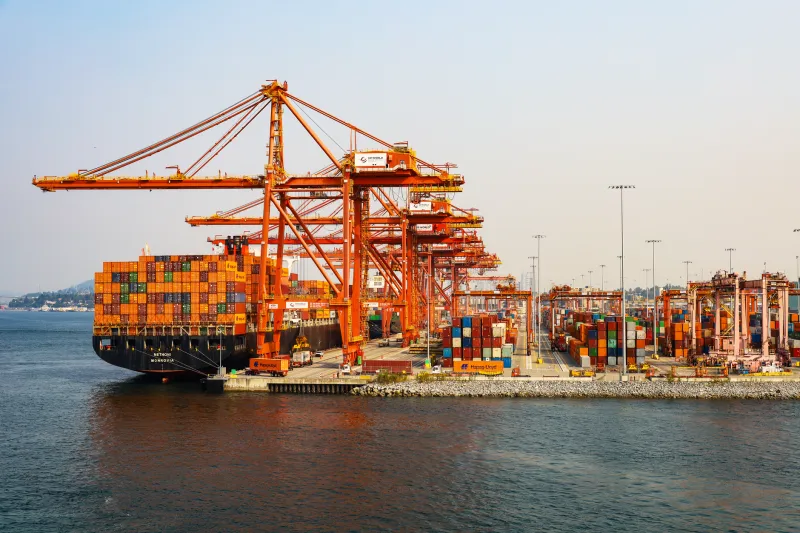
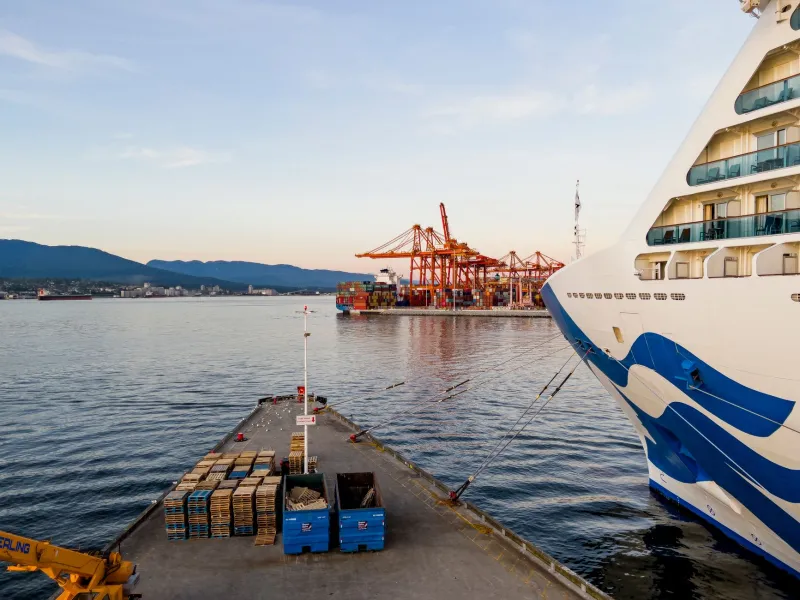
Port dynamics on Canadian gateways add a layer of regional complexity. The Port of Vancouver and the Port of Prince Rupert together handle the majority of Canada's transpacific container volume, and both are subject to congestion cycles that affect landed costs independently of base freight rates. Dwell times, chassis availability, and rail connectivity to inland destinations all contribute to the effective cost of a shipment in ways that a spot rate quote will never capture. Similarly, Eastern Canadian importers routing through the Port of Montreal or Halifax face their own seasonal and structural pressures.
Geopolitical disruptions have demonstrated repeatedly that they can reprice entire trade lanes within weeks. The Red Sea situation that began in late 2023 rerouted significant Asia-Europe volume around the Cape of Good Hope, tightening global vessel supply and pushing transpacific rates higher in a market that had been softening. Canadian importers are not insulated from these global shocks simply because their lanes are distinct.
The Case for Forward Contracting
The most direct tool available to importers seeking cost certainty is the long-term service contract. Rather than purchasing capacity at prevailing spot rates, a forward contract locks in an agreed rate—or a defined rate band—for a specified volume over a contract period, typically six to twelve months.
The tradeoff is straightforward: you sacrifice the potential upside of falling spot rates in exchange for protection against upward spikes. For businesses where freight is a material cost of goods sold, this is often a rational exchange. A Canadian retailer importing seasonal merchandise, for example, cannot afford to have its landed cost assumptions invalidated by a 40 percent rate increase between the time a purchase order is placed and the time goods arrive at a distribution centre.
Negotiating effective contracts, however, requires volume credibility and market intelligence. Carriers are more willing to offer competitive fixed rates to shippers who can demonstrate consistent, predictable volumes across multiple sailings. Importers who aggregate their freight—either through consolidation programmes or by working with a freight intermediary who can bundle volumes across multiple clients—are in a meaningfully stronger negotiating position.
Rate Corridors and Indexed Agreements
For importers who find a fully fixed rate too inflexible, rate corridor agreements offer a middle path. Under this structure, a minimum and maximum rate are agreed upon for the contract period. If the market rate falls below the floor, the importer pays the floor; if it rises above the ceiling, the carrier absorbs the excess. Within the corridor, rates float with the market.
This approach is gaining traction on major transpacific lanes serving Canadian ports because it distributes risk more equitably between shipper and carrier. It also tends to produce more durable commercial relationships, as neither party feels systematically disadvantaged when the market moves.
Indexed agreements, which tie contracted rates to a recognised benchmark such as the Shanghai Containerised Freight Index (SCFI), offer a related but distinct mechanism. Rather than setting a fixed price, the contract establishes the relationship between the benchmark and the shipper's rate, providing transparency and reducing the adversarial dynamic that can accompany fixed-rate renegotiations.
Building Resilience Through Diversified Carrier Relationships
Over-reliance on a single carrier or alliance is one of the most common vulnerabilities in Canadian importers' freight procurement. When a preferred carrier implements a general rate increase, withdraws capacity on a specific lane, or experiences operational disruptions, importers without alternatives face the worst of both worlds: higher costs and reduced reliability.
Maintaining active relationships with two or three carriers on key trade lanes—even if the majority of volume flows through a primary partner—provides meaningful optionality. It also strengthens your negotiating position at contract renewal, as carriers are aware that their competitor is a credible alternative.
For smaller importers who lack the volume to negotiate directly with carriers, working with a licensed freight forwarder or ocean freight intermediary who holds their own contracted capacity can provide access to comparable rate stability without the volume commitments that direct contracts require.
Operational Tactics That Reduce Rate Exposure
Beyond contractual mechanisms, there are operational practices that reduce the degree to which spot-rate volatility affects your landed costs.
Advancing your booking horizon is perhaps the most straightforward. Importers who book six to eight weeks ahead of required arrival dates have access to a broader range of rate options and are less likely to find themselves competing for scarce space at peak-season premiums. This requires tighter integration between procurement, inventory planning, and logistics—but the financial payoff is often substantial.
Flexibility on routing and port of entry can also create cost advantages. On transpacific lanes, the choice between Vancouver and Prince Rupert, or between a direct call and a transshipment routing through a hub such as Los Angeles, carries real rate implications. Importers who are genuinely indifferent between these options—because their inland distribution network can be served efficiently from either gateway—should make that flexibility explicit in their carrier negotiations.
Seasonal volume smoothing, where operationally feasible, reduces the degree to which your freight procurement is concentrated in peak-rate windows. Importers who can pull forward or defer shipments by even a few weeks often find they can avoid the worst of seasonal surcharges.
Looking Ahead to 2025 and Beyond
The structural factors that have driven rate volatility over the past five years show little sign of abating. New vessel deliveries will periodically create overcapacity, carrier alliances will respond with blank sailings, and geopolitical events will continue to disrupt trade lanes in ways that are impossible to predict with precision. For Canadian importers, the appropriate response is not to forecast the market—it is to build a procurement framework that performs acceptably across a wide range of market scenarios.
That means combining contractual protections with operational flexibility, maintaining carrier relationships that provide genuine alternatives, and integrating freight cost management into broader supply chain planning rather than treating it as a transactional purchasing exercise.
The importers who will navigate the next cycle most effectively are those who treat ocean freight not as a commodity to be bought at the lowest available price, but as a strategic input that warrants the same rigour and foresight applied to any other critical procurement category.