Who Docks First: Understanding Berth Allocation Politics and Why Canadian Importers Pay the Price for Ignoring Them
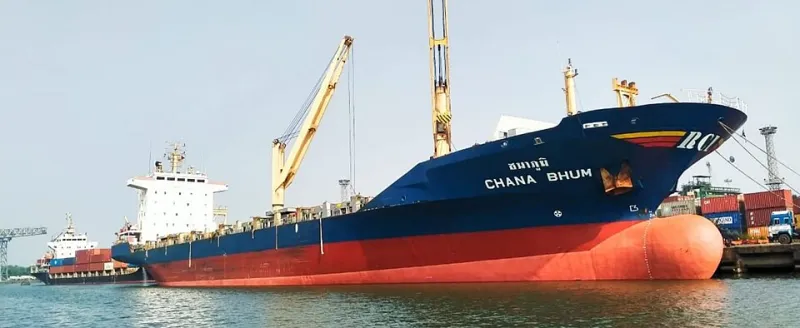
Photo: Syama Prasad Mookerjee Port, Kolkata, GODL-India, via Wikimedia Commons
When a vessel arrives at port, most Canadian importers assume the process that follows is largely mechanical: the ship docks, cargo is discharged, containers move to the yard, and the importer arranges pickup. The sequence feels administrative. It does not feel like a place where competitive advantage is won or lost.
That assumption is wrong—and it is costing importers time and money they cannot easily account for.
Behind every port schedule sits a layered system of berth allocation that determines which vessels dock when, how long they wait at anchor, and how quickly their cargo flows through the terminal. The rules governing that system are not published in any rate card. They are embedded in terminal operating agreements, carrier equity stakes, and commercial relationships that have been built over decades. Canadian importers who understand these dynamics make better booking decisions. Those who do not absorb the consequences in the form of delays, unexpected demurrage, and supply chain disruptions that appear to have no clear cause.
The Architecture of Berth Allocation
Major container terminals operate under berth allocation frameworks that balance two competing pressures: the terminal's need to maximise throughput and the shipping line's need for schedule reliability. The mechanism through which these pressures are resolved varies by port, but the structural outcome is consistent: carriers with stronger commercial relationships to the terminal receive preferential berth access.
This preference takes several forms. Some carriers hold equity positions in terminal operating companies—a model that has become increasingly common as major shipping alliances have invested in port infrastructure globally. A carrier that partly owns the terminal at which its vessels call is not competing for berth access on the same terms as a carrier that is simply a customer of that terminal.
Other preference relationships are contractual. Long-term volume commitments between a carrier and a terminal operator may include guaranteed berth windows, priority scheduling during high-congestion periods, or reduced waiting time guarantees. These agreements are rarely disclosed publicly, but their effects are visible to anyone tracking vessel dwell times across different carriers at the same port.
What This Means at the Ports Canadian Importers Use
For cargo moving through Vancouver, Prince Rupert, Montreal, or Halifax, berth allocation dynamics are directly relevant to import planning. The major Canadian container terminals have established relationships with the principal shipping alliances, and those relationships are not uniform across carriers.
At Vancouver's Deltaport and Centerm, for example, the carriers that call most frequently and with the largest vessel classes have operational arrangements that differ materially from those of smaller or less frequent callers. During periods of congestion—which have been a recurring feature of Canadian west coast port operations in recent years—vessels with stronger terminal relationships are more likely to receive priority berthing. Those without such relationships may anchor and wait.
The importer whose cargo is on the waiting vessel does not receive a notification explaining that the delay is a function of berth allocation politics. They receive a revised ETA and, potentially, a demurrage invoice.
Reading the Signals Before You Book
The practical implication for Canadian importers is that carrier selection should incorporate terminal relationship intelligence alongside the more commonly evaluated factors of transit time, rate, and schedule frequency.
Several data points are publicly accessible and informative. Vessel dwell time records—how long ships of different carriers wait at anchor before berthing at a given port—are available through port authority publications and commercial maritime data services. A consistent pattern of shorter anchor times for certain carriers at a specific terminal is a reliable indicator of preferential access.
Alliance membership is another relevant signal. The major shipping alliances—Ocean Alliance, 2M (now transitioning following structural changes), and THE Alliance—share terminal relationships across their member carriers. A carrier that individually may not hold a terminal equity stake may benefit from alliance-level agreements that provide preferential access. Understanding which alliance a carrier belongs to, and what terminal arrangements that alliance holds at your destination port, is a meaningful input to booking decisions.
Shipping line port rotation sequences also merit attention. A carrier that lists your destination port as a primary call—rather than a secondary or feeder port on its rotation—is more likely to have strong terminal relationships there. Secondary calls often involve shorter vessel windows and less favourable berth priority.
Negotiating Detention Terms with Terminal Knowledge
Berth allocation intelligence has a direct application in commercial negotiation that most Canadian importers have not explored. Detention terms—the period during which a container can remain in the importer's custody before daily charges begin—are typically presented as standard contractual provisions. In practice, they are negotiable, and the basis for negotiation is stronger when the importer can demonstrate awareness of carrier terminal behaviour.
An importer negotiating with a carrier that has documented patterns of anchor delays at the destination port is in a position to argue for extended free time provisions that reflect the realistic probability of delayed discharge. This is not a speculative claim—it is a data-supported request grounded in the carrier's own operational history at that terminal.
Carriers are unlikely to volunteer this concession without prompting. But an importer who arrives at a rate negotiation with specific terminal dwell time data and a clear articulation of how berth allocation patterns affect their inland logistics windows is demonstrating a level of commercial sophistication that tends to produce better outcomes than a negotiation conducted on the carrier's preferred terms.
Timing Bookings Around Terminal Cycles
Beyond carrier selection and detention negotiation, berth allocation awareness supports more precise booking timing. Terminals operate on predictable cycles of congestion and relative availability that correlate with shipping alliance schedule patterns, seasonal trade volumes, and port maintenance windows.
An importer who understands that a particular terminal experiences consistent congestion during a specific four-week window each quarter—because three major alliance vessels converge on the same berth allocation window—can time bookings to avoid that period or select carriers whose schedules place their vessels outside the peak congestion window.
This level of planning requires more detailed knowledge of terminal operations than most importers currently maintain. But the information is accessible. Port authorities publish vessel schedules, terminal operators release congestion advisories, and commercial maritime intelligence services track berth utilisation patterns. The challenge is not data availability—it is the discipline to integrate that data into booking decisions before the cargo is already at sea.
The Strategic Implication
Berth allocation is not a peripheral concern for Canadian importers. It is a central variable in the actual, as opposed to the scheduled, performance of ocean freight services. The importers who treat it as such—who factor terminal relationships into carrier selection, use dwell time data in commercial negotiations, and time bookings with awareness of congestion cycles—are operating with a more complete picture of the freight market than those who do not.
At Ocean Impex Canada, we believe that information is the foundation of effective trading. The berth allocation intelligence gap is one of several areas where better knowledge translates directly into better commercial outcomes for Canadian importers—and closing that gap is precisely the kind of strategic work we do with our clients.