The Return Trip Reimagined: Building a Profitable Reverse Logistics Model for Canadian Ocean Exporters
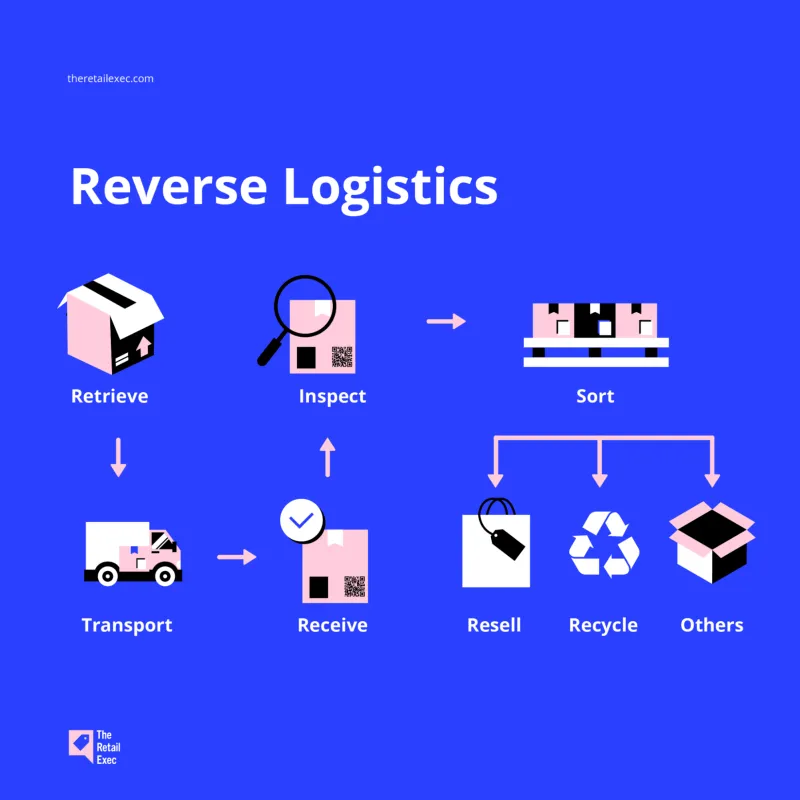
Photo: reverse logistics warehouse returned goods cargo pallets inventory, via theretailexec.com
For most Canadian exporters, the moment a shipment leaves port represents the end of the commercial transaction. Revenue has been recognised, the container has sailed, and attention has moved to the next order. What happens when goods come back—damaged, rejected at customs, overstocked, or returned by an overseas buyer—tends to be treated as an afterthought.
That afterthought is quietly consuming margin.
Reverse logistics in ocean freight is one of the least examined cost centres in Canadian export operations, and for precisely that reason, it is also one of the most underutilised sources of recoverable value. The companies beginning to understand this are not simply cutting losses on returns. They are building structured programmes that convert reverse freight flows into a secondary revenue stream.
Why Reverse Ocean Freight Gets Overlooked
The neglect of return logistics is partly cultural and partly structural. Exporting is understood as the primary commercial act; returning is understood as its failure. Accounting frameworks tend to reinforce this: returned goods are written down, freight costs are absorbed, and the transaction is closed. The question of whether value remains in the returned goods—and whether it can be captured—rarely surfaces in the same conversation as the freight invoice.
Structurally, the problem compounds because reverse shipments are typically small, irregular, and logistically awkward. A pallet of rejected goods in a warehouse in Rotterdam or a crate of overstocked product sitting in a distribution centre in Guangzhou does not fit neatly into a standard export container booking. The path of least resistance is to dispose of the goods locally, absorb the loss, and move on.
But that path has a cost, and increasingly, Canadian exporters are recognising that a more deliberate approach produces better financial outcomes.
The Value Embedded in Returns
Not all returned goods are created equal, and the first step in building a reverse logistics programme is understanding what is actually coming back and why.
Goods rejected due to minor cosmetic defects, packaging damage, or labelling discrepancies often retain most of their underlying value. In many product categories, refurbishment to a secondary market standard is economically viable—particularly when the refurbishment can be performed at or near the point of return rather than requiring transoceanic freight back to Canada.
Overstocked inventory returned by overseas distributors represents a different opportunity. These goods are typically in full sellable condition. The question is not whether they have value but where that value can best be realised. Secondary market channels in the originating country, regional liquidators, or consolidated shipment back to Canada for domestic sale or re-export are all options that a structured programme can evaluate systematically.
Customs rejections—goods that fail to clear at the destination—are more complex but not without recovery potential. Depending on the nature of the rejection and the goods involved, re-export to a third market or return to Canada under bond may be preferable to abandonment or destruction.
Refurbishment Hubs: The Structural Solution
The most sophisticated approach to reverse ocean freight involves establishing or contracting with refurbishment and reprocessing facilities at key export destinations. Rather than routing returned goods back to Canada—incurring full transoceanic freight costs in both directions—these hubs assess, repair, repackage, and redistribute goods within the destination region.
For Canadian exporters with significant volumes to Asia-Pacific or European markets, this model can substantially reduce the net cost of returns while simultaneously opening access to secondary market revenue that would otherwise be unavailable. A product returned by a buyer in Germany, refurbished at a European hub, and sold into a secondary channel in Eastern Europe generates revenue that a disposal or write-down policy would have permanently surrendered.
The investment required to establish this infrastructure is not trivial, and it is most viable for exporters with sufficient return volumes to justify the fixed costs. However, third-party logistics providers in major trade corridors increasingly offer refurbishment and secondary market services on a shared-cost basis—making the model accessible to mid-market Canadian exporters who cannot justify a dedicated facility.
Smart Consolidation: Making the Math Work on Small Returns
For exporters whose return volumes are insufficient to support a refurbishment hub model, consolidation offers an alternative path to cost recovery. Rather than arranging individual return shipments for each returned unit or pallet, a consolidation approach aggregates returns across a defined collection period and ships them as a single LCL or FCL consignment.
This is not a novel concept in inbound freight—Canadian importers have used LCL consolidation for years to manage small-volume shipments economically. Applying the same logic to reverse flows requires only the discipline to hold returns at a designated overseas location until a viable consolidation threshold is reached.
The cost savings from consolidation can be substantial. Per-unit freight costs on a consolidated return shipment may be sixty to seventy percent lower than on individually arranged returns. Combined with improved customs processing efficiency—a single consolidated entry rather than multiple declarations—the administrative burden also decreases.
Negotiating Reverse Freight Terms Proactively
One dimension of reverse logistics that Canadian exporters consistently underutilise is the commercial negotiation. Most ocean freight contracts are negotiated entirely around outbound volumes. Return freight, if it is addressed at all, is handled on a spot basis at whatever rate the market offers at the time a return arises.
Exporters with predictable return volumes—seasonal goods, products sold under return guarantees, or categories with historically elevated rejection rates—are in a position to negotiate reverse freight terms as part of their primary carrier agreements. This may include pre-agreed rates for return shipments, priority container availability for return consolidations, or favourable terms on storage at origin ports pending consolidation.
Carriers and freight forwarders have a direct commercial interest in securing both legs of a trade relationship. An exporter who presents reverse logistics volume as part of a total freight package is negotiating from a stronger position than one who treats returns as an afterthought.
Reclassifying the Return
The most important shift for Canadian exporters is not operational but conceptual. Reverse logistics is not a failure to be minimised. It is a supply chain process to be managed—and like any managed process, it can be optimised to produce better financial outcomes than the default approach of absorption and write-down.
The exporters building structured reverse logistics programmes are not doing so because they expect more returns. They are doing so because they have recognised that their existing return flows contain recoverable value that their current practices are leaving on the table.
In a trading environment where margins are under consistent pressure and every cost centre is subject to scrutiny, that recognition is becoming a competitive differentiator. Ocean Impex Canada works with Canadian exporters to identify and act on exactly these kinds of structural opportunities in their international freight operations.