Paper Trails and Port Penalties: The Hidden Cost of Documentation Errors in Canadian Ocean Freight
In ocean freight, the physical journey of a container is only half the story. The other half is made of paper—or more precisely, of data fields, certification numbers, and regulatory declarations that must align perfectly before any cargo clears a Canadian port. When they do not align, the consequences are neither minor nor theoretical. They arrive as demurrage invoices, missed delivery appointments, and supply chain disruptions that ripple outward for weeks.
For mid-market Canadian importers, documentation errors are among the most preventable—and most persistently ignored—sources of cost. Understanding exactly where these errors occur, and why, is the first step toward eliminating them.
Why Documentation Errors Are a Structural Problem, Not an Occasional Nuisance
Many importers treat documentation as a clerical formality rather than a strategic function. That framing is costly. The Canada Border Services Agency (CBSA) processes thousands of commercial entries each day, and its automated systems are designed to flag inconsistencies before cargo is released. A discrepancy between the commercial invoice and the bill of lading—even something as minor as a mismatched unit of measure—can place a shipment on hold pending review.
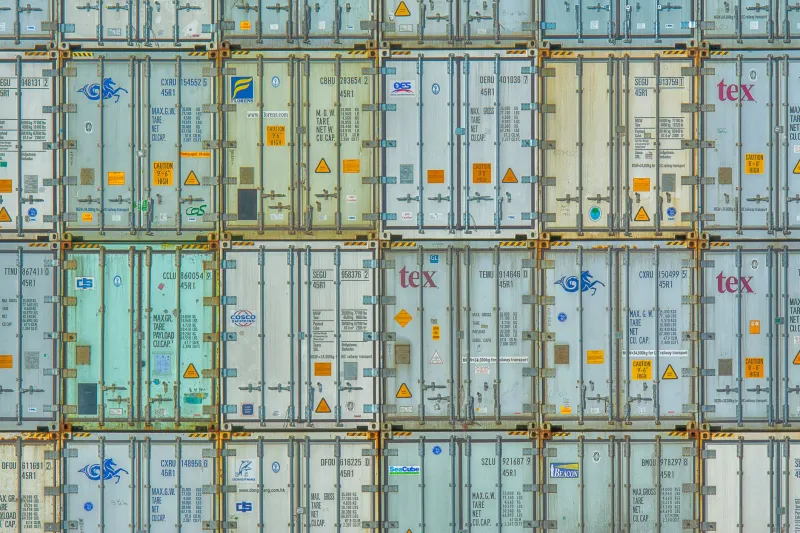
The real danger is not the initial flag itself, but the time it consumes. Canadian ports, particularly Vancouver and Montreal, operate under tight terminal schedules. Free time—the window during which a container may remain at the terminal without charge—is typically four to five calendar days. Once that window closes, demurrage accumulates daily, often at rates between $150 and $300 CAD per container per day depending on the carrier and terminal. A documentation review that takes three days to resolve can therefore generate hundreds of dollars in charges before a single correction is made.
Multiply that across a multi-container shipment arriving during peak season, and the financial exposure becomes significant.
The Documents That Trip Up Canadian Importers Most Frequently
Not all paperwork carries equal risk. Certain document types are disproportionately responsible for clearance delays at Canadian ports of entry.
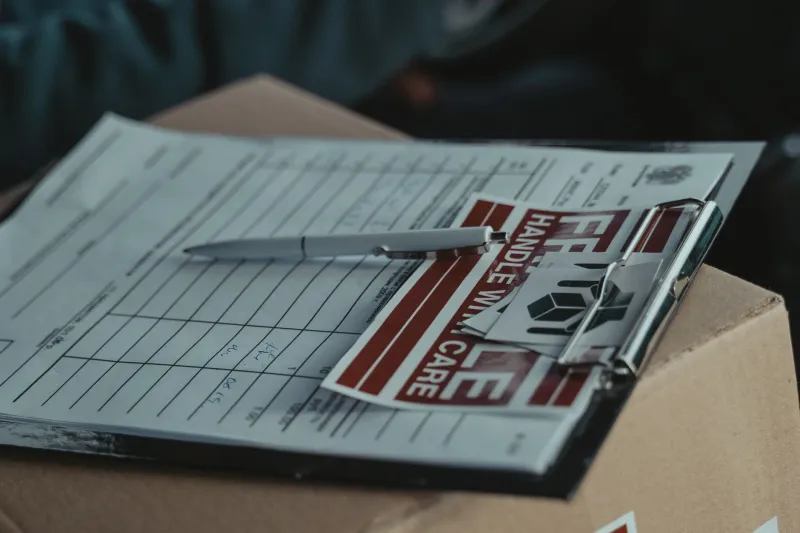
The Commercial Invoice remains the most common source of error. Canadian customs requires that invoices include the seller's and buyer's full legal names and addresses, a precise description of goods, country of origin, unit price, total value in the transaction currency, and the applicable Harmonized System (HS) tariff code. Vague descriptions such as "machine parts" or "consumer goods" are insufficient and will trigger a review request.
The Packing List must correspond exactly to the commercial invoice in terms of item descriptions, quantities, and weights. Discrepancies between these two documents—even minor ones arising from last-minute cargo adjustments—are a frequent cause of holds.
The Bill of Lading (BOL) must accurately reflect the shipper, consignee, notify party, port of loading, port of discharge, and container numbers. Any deviation from what has been declared to CBSA through the Advance Commercial Information (ACI) system can result in a cargo examination.
Certificates of Origin are increasingly scrutinised, particularly as Canadian trade agreements with the European Union (CETA) and Pacific Rim nations (CPTPP) create both preferential duty opportunities and heightened verification requirements. Importers who fail to obtain properly formatted certificates of origin forfeit tariff reductions they may have relied upon in their landed cost calculations.
Phytosanitary and Health Certificates apply to food products, agricultural goods, and certain raw materials. The Canadian Food Inspection Agency (CFIA) has specific formatting requirements for these documents, and certificates issued by foreign authorities that do not match CFIA templates are frequently rejected on first submission.
The Cascade Effect: What One Delay Actually Costs
Documentation problems rarely stay contained. When a shipment is placed on hold at a terminal, the downstream consequences begin almost immediately.
A manufacturer awaiting components for a production run cannot reschedule machinery or labour on short notice. A retailer expecting inventory ahead of a promotional period loses both margin and shelf positioning. A distributor committed to client delivery windows incurs contractual penalties when those windows are missed.
The CBSA hold itself may be resolved within 48 to 72 hours in routine cases, but the terminal clock has been running throughout. By the time the release is issued, free time has often expired. The importer then faces not only demurrage charges but potentially repositioning fees if the container has been moved to a remote stacking area to free terminal space.
In aggregate, these costs—demurrage, detention, expedited inland transport to recover lost time, and client penalty exposure—frequently exceed the value of the documentation error that caused them.
A Practical Documentation Checklist for Canadian B2B Importers
The following standards address the areas where Canadian importers most commonly encounter clearance problems:
- Verify HS codes at the six-digit level minimum, and confirm the applicable Canadian tariff classification at the ten-digit level before shipment. Do not rely on codes provided by foreign suppliers without independent verification.
- Ensure commercial invoice descriptions are specific and technical, not generic. Include material composition, end use, brand name where applicable, and model or part numbers.
- Confirm that all party names and addresses on the BOL, commercial invoice, and packing list are identical—including punctuation and abbreviations. Automated customs systems perform exact-match comparisons.
- Obtain certificates of origin in advance, not at the time of shipment. Verify that the issuing body and format are acceptable to CBSA for the specific trade agreement being invoked.
- Submit ACI data at least 24 hours before vessel arrival for marine shipments. Late or amended submissions increase the probability of a targeted examination.
- Maintain a document checklist specific to each commodity type and country of origin, updated whenever regulatory requirements change.
- Appoint a licensed customs broker who reviews documentation before the vessel departs the origin port, not after it arrives in Canada.
Turning Documentation Into a Competitive Advantage
The importers who consistently clear Canadian customs without delay share one characteristic: they treat documentation preparation as a pre-shipment function, not a post-arrival scramble. By establishing standardised document templates with foreign suppliers, building pre-shipment checklists into their procurement workflow, and maintaining standing relationships with licensed customs brokers, they convert a common liability into a reliable operational advantage.
In a freight environment where port congestion, vessel schedule variability, and carrier capacity constraints are already beyond any single importer's control, documentation compliance is one of the few variables that can be managed entirely from within. The importers who recognise this—and act on it—spend their energy managing margins, not contesting demurrage invoices.