Seeing the Ship Before It Arrives: How Real-Time Vessel Intelligence Is Reshaping Canadian Import Strategy

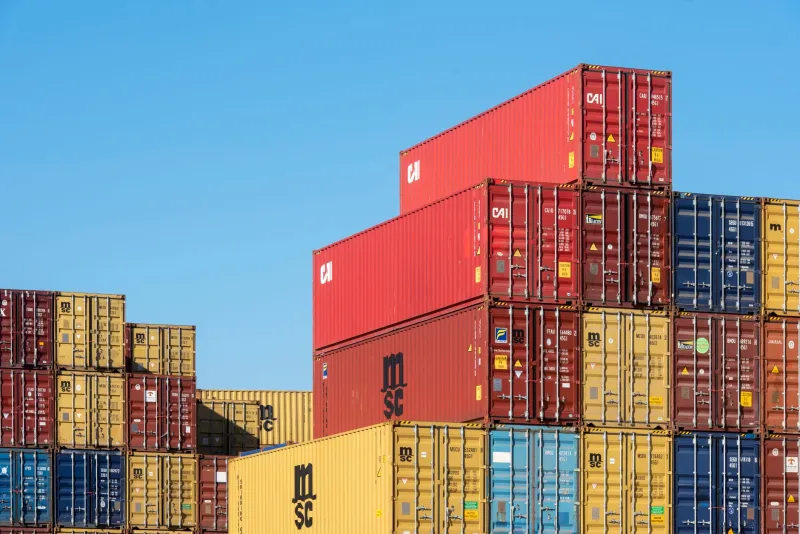
Photo by Photo by Anastasios Antoniadis on Unsplash on Unsplash
There is a moment every Canadian importer knows well: the cargo is somewhere on the Pacific, the ETA has not changed in five days, and the warehouse team is asking whether to schedule the receiving crew. The answer, more often than not, is a guess.
This is not a minor inconvenience. It is a structural vulnerability in the way most Canadian businesses manage ocean freight—and it is costing them money in ways that rarely appear on a single invoice but accumulate steadily across every shipment.
The Limits of the Standard ETA
The estimated time of arrival is a blunt instrument. Carriers issue it at departure, update it infrequently, and calculate it using assumptions that rarely account for real-world vessel behaviour in transit. Weather deviations, port congestion at transshipment hubs, speed reductions ordered for fuel optimisation, and last-minute schedule adjustments by the shipping line can all shift an arrival window by days—sometimes longer—without triggering an automatic update to the importer.
The result is that Canadian businesses managing ocean shipments are often working with information that is twelve to forty-eight hours out of date on any given day. In a supply chain where inland trucking must be pre-booked, warehouse slots are finite, and customs brokers need advance notice to prepare documentation, that lag translates directly into either excess cost or missed opportunity.
What Vessel Tracking Data Actually Reveals
Modern Automatic Identification System (AIS) data, combined with commercial vessel intelligence platforms, offers a fundamentally different picture. Rather than waiting for a carrier to issue an update, importers with access to live tracking can monitor a vessel's current position, speed over ground, heading, and historical port call patterns—all in near real time.
The practical implications go well beyond knowing where the ship is. A vessel travelling at significantly reduced speed across the North Pacific is unlikely to meet its stated ETA. A ship that has already anchored outside a transshipment hub suggests terminal congestion that may delay onward connections. A carrier that has rerouted through an alternate port on three of its last five voyages may be managing a terminal relationship that its published schedule does not disclose.
For Canadian importers, each of these signals represents actionable intelligence—provided someone on the team is reading them.
Turning Data Into Decisions
The businesses gaining the most from vessel intelligence are not necessarily the largest. They are the most disciplined. They have established a workflow in which someone reviews tracking data at regular intervals during transit, flags anomalies, and triggers a pre-agreed response protocol before the ship arrives.
Practically, this means that when a vessel shows a two-day speed reduction mid-voyage, the logistics team is already on the phone with the trucking provider to adjust the pickup window—rather than scrambling after the revised ETA lands in an inbox. It means that a warehouse receiving schedule built around an 8 a.m. Tuesday arrival can be quietly shifted to Thursday before any demurrage clock begins ticking.
This kind of pre-emptive adjustment is not sophisticated in concept. It is simply the application of better information to decisions that importers are already making every day. The difference is that it happens before a problem becomes a cost.
The Force Majeure Dimension
Vessel tracking data has a less obvious but equally significant application in commercial dispute resolution. When cargo arrives late and a downstream customer or supplier seeks to assign liability, the question of what the shipper knew and when they knew it becomes consequential.
AIS records provide a timestamped, third-party-verifiable account of vessel movements. An importer who can demonstrate that a vessel deviated from its published route, anchored unexpectedly outside a congested port, or experienced documented speed anomalies is in a materially stronger position when invoking force majeure clauses or contesting delay-related penalties.
This is not a theoretical scenario. As supply chain disruptions have become more frequent and more visible, the documentation of carrier behaviour during transit has grown in commercial and legal importance. Canadian importers who retain access to AIS records for their shipments are building an evidence base that their competitors, relying only on carrier-issued ETAs, simply do not have.
Information Asymmetry as Competitive Advantage
It is worth stating plainly: the shipping lines and major freight forwarders already have access to this data. Carriers monitor their own fleet movements continuously. Large logistics operators subscribe to commercial AIS platforms as a matter of standard practice. The information asymmetry that disadvantages Canadian importers is not inherent to the market—it is a function of adoption.
For mid-market Canadian businesses managing regular ocean freight volumes, the investment required to close this gap is modest relative to the exposure it addresses. Several commercial platforms offer AIS-based vessel tracking with alert functionality, historical route analysis, and port congestion indicators at price points accessible to companies that are not operating dedicated logistics technology teams.
The more significant investment is organisational: building the habit of reviewing tracking data, establishing escalation protocols when anomalies appear, and integrating vessel intelligence into the broader rhythm of supply chain management.
Inland Logistics: The Downstream Payoff
Perhaps the clearest financial case for vessel tracking lies in its impact on inland logistics coordination. For Canadian importers moving containers through Vancouver, Prince Rupert, Montreal, or Halifax, the cost of rescheduling or repositioning ground transport after an unexpected arrival change is rarely trivial. Trucking capacity in major port corridors is constrained, and last-minute bookings carry premium pricing.
An importer who identifies a likely arrival shift five days out can rebook inland transport at standard rates. One who learns of the same shift twelve hours before vessel arrival is negotiating from a position of weakness—or absorbing the cost of a missed pickup window.
Multiplied across a year of shipments, the difference in inland logistics efficiency between these two approaches represents a meaningful contribution to margin. Vessel tracking does not eliminate disruption. It converts reactive crisis management into proactive cost control—and in ocean freight, that distinction is where competitive advantage is built.
Moving Forward
The barrier to better vessel intelligence is lower than most Canadian importers assume. The data exists. The platforms to access it are commercially available. The workflows to act on it are straightforward to implement. What is required is the recognition that waiting for a carrier to deliver information is a choice—and that choosing differently produces measurably better outcomes.
At Ocean Impex Canada, we work with B2B clients across the country to build the operational habits and commercial relationships that turn ocean freight from a cost variable into a managed asset. Vessel intelligence is one part of that picture. It is, however, an increasingly important one.