Clearing the Compliance Hurdle: A Canadian Exporter's Guide to Staying Ahead of International Trade Regulations
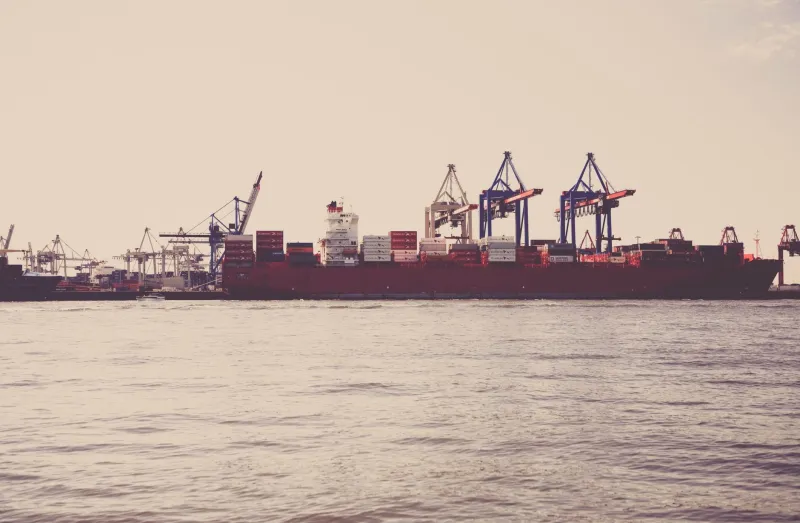
For Canadian businesses engaged in ocean freight exports, the physical movement of goods is only half the challenge. The other half — increasingly demanding, frequently updated, and often underestimated — is regulatory compliance. As international trade frameworks continue to shift in response to geopolitical pressures, renegotiated agreements, and heightened customs scrutiny, exporters who treat compliance as an afterthought are discovering the consequences in the form of delayed shipments, seized cargo, and financial penalties.
At Ocean Impex Canada, we work daily with B2B clients navigating the intersection of ocean logistics and international trade law. What follows is a candid examination of where Canadian exporters most commonly encounter compliance difficulties — and what can be done to avoid them.
The Classification Problem: Getting Tariff Codes Right the First Time
Every product crossing an international border must be assigned a Harmonized System (HS) tariff code — a standardised numerical classification used by customs authorities worldwide. In theory, this is a straightforward exercise. In practice, it is one of the most common sources of compliance failure.
Misclassification can occur for several reasons: products that span multiple categories, goods that have been modified since their last export, or simply outdated internal records that have not kept pace with HS code revisions. The World Customs Organization updates the Harmonized System every five years, with the most recent revision having taken effect in 2022. Exporters still operating with pre-revision codes may be filing inaccurate documentation without realising it.
The stakes are significant. An incorrect HS code can trigger the wrong duty rate at the destination country, flag a shipment for inspection, or — in cases involving controlled goods — result in export permit violations under Canada's Export and Import Permits Act.
Practical step: Conduct an annual audit of your product classifications, cross-referencing against the Canada Border Services Agency (CBSA) Customs Tariff schedule and destination-country requirements. For complex or multi-component goods, consider engaging a licensed customs broker to provide a formal binding ruling.
Origin Documentation: More Than a Formality
Proof of origin is the documentary foundation upon which preferential tariff treatment under free trade agreements rests. Canada is party to a growing number of such agreements — including CUSMA, CPTPP, and CETA — each with its own rules of origin criteria, certification formats, and record-keeping obligations.
A certificate of origin that does not accurately reflect how and where a product was manufactured can invalidate a buyer's claim for preferential duty rates. Worse, if a foreign customs authority conducts a post-import verification and finds the claim unsupported, the importer — your customer — faces retroactive duty assessments. That outcome damages commercial trust and, in competitive markets, can cost you the relationship.
Origin determination is particularly complex for manufacturers who source components globally. A finished product assembled in Canada may not automatically qualify as Canadian-origin under all agreements; it must meet specific value-content thresholds or tariff-shift requirements depending on the FTA in question.
Practical step: Maintain a complete bill of materials for each exported product, documenting the origin and value of all inputs. Retain this documentation for a minimum of six years, as required under CUSMA verification provisions.
Emerging Requirements Under Evolving Trade Agreements
Trade agreements are living documents, and their implementing regulations evolve. Canadian exporters targeting markets covered by the CPTPP — which now includes eleven member countries across the Asia-Pacific — must stay current with the agreement's specific chapter requirements, including those related to customs procedures, sanitary standards, and technical barriers to trade.
Similarly, exporters to the European Union under CETA face product-specific requirements that go beyond tariff classification. Certain sectors — food and beverage, pharmaceuticals, and machinery — are subject to conformity assessments, labelling requirements, and, in some cases, geographic indication restrictions that affect how products can be marketed abroad.
Adding further complexity, Canada's trading partners are increasingly implementing their own unilateral measures — including supply chain due diligence laws, carbon border adjustment mechanisms, and enhanced country-of-origin labelling — that Canadian exporters must accommodate even where no bilateral obligation exists.
Practical step: Subscribe to Global Affairs Canada trade alerts and monitor destination-country customs authority bulletins. Assign internal accountability for regulatory monitoring rather than treating it as a shared — and therefore unowned — responsibility.
Export Controls and Permit Requirements
Not all goods can be exported freely. Canada maintains an Export Control List under the Export and Import Permits Act, covering categories ranging from military and dual-use technologies to certain agricultural products and softwood lumber subject to quota management. Exporting controlled goods without the appropriate permit is a criminal offence.
Beyond Canada's own controls, exporters must also account for destination-country import restrictions and Canadian obligations under international regimes such as the Wassenaar Arrangement and the Chemical Weapons Convention. These frameworks affect a broader range of commercial goods than many exporters realise — including certain chemicals, electronics, and telecommunications equipment.
Compliance checklist for Canadian exporters:
- Confirm the HS classification of all products against the current CBSA tariff schedule
- Determine whether goods appear on Canada's Export Control List
- Identify applicable free trade agreements and verify origin eligibility
- Prepare and retain origin documentation in the format required by each agreement
- Review destination-country import requirements, including labelling and conformity standards
- Ensure all export declarations are filed accurately through the Canadian Export Reporting System (CERS)
- Establish a schedule for periodic compliance reviews, particularly following HS code updates or FTA amendments
The Cost of Non-Compliance Is Not Just Financial
Delays at port are the most immediate consequence of a compliance failure, but the downstream effects extend further. Perishable goods spoil. Production lines at the receiving end are disrupted. Letters of credit with strict shipment date requirements may lapse. And in industries where regulatory compliance is a supplier qualification criterion — aerospace, automotive, and food processing among them — a single documentation failure can trigger a supplier audit or disqualification.
For Canadian exporters competing in international markets, the ability to move goods reliably and compliantly is not merely an operational concern — it is a commercial differentiator.
At Ocean Impex Canada, we believe that well-prepared exporters are better exporters. Regulatory compliance, approached proactively rather than reactively, is one of the most effective tools available for protecting shipment timelines, preserving commercial relationships, and building the kind of international reputation that sustains long-term growth.
If your organisation is reassessing its compliance posture ahead of a new trade lane or market entry, we invite you to connect with our team. Connecting Canada to global markets begins long before a container reaches the dock.