Beyond Asia: The Case for Rethinking Where Canadian Importers Source Their Ocean Freight
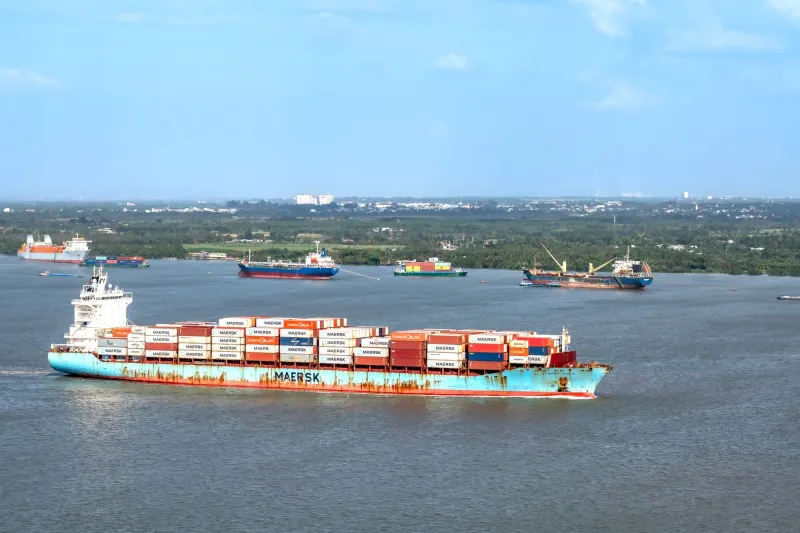
For the better part of three decades, the dominant logic of Canadian import procurement was straightforward: manufacture in Asia, ship across the Pacific, distribute across Canada. The economics were compelling, the infrastructure mature, and the trade lanes well-established. That logic has not disappeared — but it has become considerably more complicated.
In 2025, a confluence of geopolitical pressures, freight market volatility, and evolving supply chain philosophy is prompting Canadian importers to ask a question that would have seemed almost radical five years ago: should we be less dependent on Asia?
This is not a rhetorical exercise. It is a strategic planning imperative for B2B decision-makers who have spent the past several years absorbing the consequences of over-concentration in a single sourcing region.
The Transpacific Dependency and Its Costs
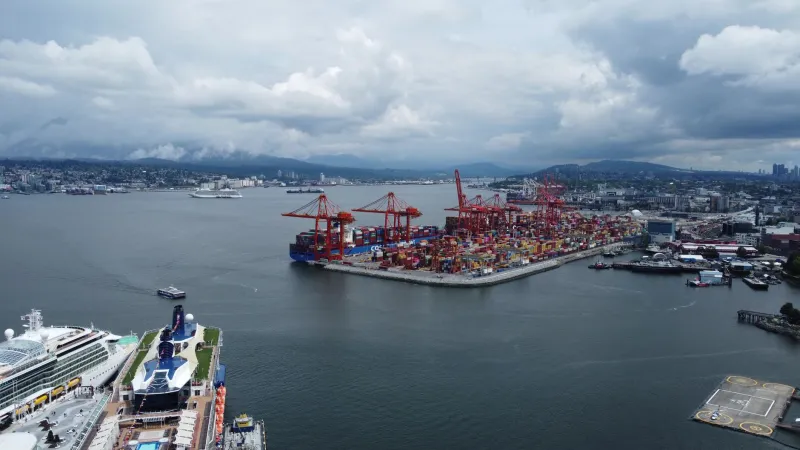
Canada's import profile remains heavily weighted toward Asia. China alone accounts for a substantial share of Canadian goods imports, with significant volumes also originating from Vietnam, India, Bangladesh, and South Korea. These goods arrive primarily through the ports of Vancouver and Prince Rupert on the West Coast — corridors that, as recent years have demonstrated, are susceptible to severe disruption.
Labour disputes, container equipment shortages, pandemic-era backlogs, and the ripple effects of conflicts in distant maritime chokepoints — including the Red Sea disruptions that rerouted vessels away from the Suez Canal in 2024 — have repeatedly exposed the fragility of single-corridor dependency. When transpacific rates spike or capacity tightens, Canadian importers with no alternative sourcing arrangements have little choice but to absorb the cost or accept the delay.
The question is not whether disruption will recur. It will. The question is whether Canadian importers will be better positioned to manage it the next time.
Nearshoring: The Mexico and Latin America Opportunity
The most discussed alternative to Asian sourcing is nearshoring — relocating or diversifying production to geographically proximate countries. For Canadian importers, this conversation centres primarily on Mexico, Colombia, and Brazil, each offering distinct advantages.
Mexico, as a CUSMA partner, offers tariff-preferential access and dramatically shorter transit times for goods moving overland or via short-sea shipping to Canadian ports. Manufacturing investment in Mexico has accelerated substantially, particularly in electronics, automotive components, and consumer goods — categories that Canadian importers have historically sourced from China.
Further south, Colombia has emerged as a competitive source for textiles, processed foods, and certain industrial inputs, supported by the Canada-Colombia Free Trade Agreement. Brazil, despite its geographic distance, offers a diversified industrial base and is increasingly accessible through direct ocean freight services calling at Eastern Canadian ports.
The freight economics of Latin American sourcing are nuanced. Transit times from South American ports to Halifax or Montreal via the Atlantic can be competitive with transpacific routes to Vancouver when inland distribution costs are factored in — a consideration that is particularly relevant for importers whose end markets are concentrated in Central or Eastern Canada.
Africa: The Underestimated Corridor
Few Canadian importers have meaningfully engaged with Sub-Saharan Africa as a sourcing region, yet the continent's manufacturing trajectory warrants attention. Countries such as Ethiopia, Morocco, and South Africa have attracted significant foreign investment in textiles, agri-processing, and light manufacturing, supported by improving port infrastructure and growing carrier interest in African trade lanes.
Morocco, in particular, has developed a substantial automotive and aerospace manufacturing sector and benefits from Atlantic positioning that places it within reasonable ocean freight range of Canadian East Coast ports. While direct services between Canadian and West African ports remain limited, transshipment options via European hubs are increasingly viable.
The Africa Continental Free Trade Area (AfCFTA), now operational, is expected to further integrate African manufacturing supply chains over the coming decade — creating sourcing opportunities that Canadian importers who establish early supplier relationships may be well-positioned to capitalise on.
Geopolitical Risk: The Variable That Cannot Be Ignored
The strategic case for diversification is inseparable from geopolitical risk assessment. Sino-American trade tensions — and Canada's complex position within that dynamic — have introduced a degree of unpredictability into transpacific supply chains that was not present a decade ago. Canadian importers of goods subject to potential tariff escalation or trade measure retaliation face exposure that diversification can partially mitigate.
It would be an oversimplification to suggest that any alternative sourcing region is geopolitically neutral. Latin America carries its own political risk profile, and African supply chains involve governance considerations that require careful supplier due diligence. The point is not to replace one concentration with another, but to construct a more balanced sourcing portfolio that reduces the impact of any single region's instability.
The Cost-Benefit Calculus: Is Diversification Worth It?
The honest answer is that route and sourcing diversification is not free. Establishing new supplier relationships takes time and carries qualification costs. Ocean freight rates on emerging trade lanes may initially be less competitive than those on mature transpacific routes. Navigating unfamiliar regulatory environments adds complexity.
However, the calculus shifts considerably when the full cost of concentration risk is included. A two-week port disruption on the West Coast, a sudden rate spike on transpacific lanes, or a tariff change affecting Asian-origin goods can impose costs that dwarf the investment required to maintain a diversified sourcing strategy.
For Canadian importers operating in categories with long lead times, narrow margins, or strong seasonality — retail, apparel, consumer electronics — the cost of a supply chain failure is not merely financial. It is reputational.
A Framework for Evaluating Diversification
For B2B importers considering whether and how to diversify, the following analytical framework provides a starting point:
1. Concentration audit: What percentage of your import volume originates from a single country or arrives via a single port corridor? Volumes exceeding 60–70% from one source warrant active diversification planning.
2. Category suitability: Not all product categories are equally suited to alternative sourcing. Labour-intensive manufactured goods are more transferable than those requiring highly specialised industrial ecosystems.
3. Trade agreement mapping: Identify which alternative sourcing countries offer preferential tariff access under Canada's existing FTA network. Preferential treatment can significantly offset the cost premium of non-Asian sourcing.
4. Total landed cost modelling: Compare not just freight rates but the full landed cost — including transit time, inventory carrying costs, duties, and inland transportation — across alternative corridors.
5. Phased implementation: Diversification does not require an immediate overhaul of procurement strategy. Piloting a secondary supplier in an alternative region on a portion of volume is a lower-risk entry point.
Strategic Necessity or Competitive Advantage?
The framing of this question matters. For some Canadian importers, diversification is primarily defensive — a hedge against disruption. For others, it represents an offensive opportunity: access to emerging manufacturing ecosystems, preferential trade terms, and supply chains that competitors have not yet discovered.
At Ocean Impex Canada, our view is that the distinction between necessity and advantage is increasingly academic. In a global trade environment defined by volatility, the importers who build flexible, multi-corridor supply chains are simply better positioned — whether the next disruption originates in a Pacific typhoon, a labour action at a major Asian port, or a shift in bilateral trade policy.
Connecting Canada to global markets means looking beyond the familiar. The ocean routes that will define Canadian import competitiveness over the next decade may not be the ones that defined the last.