The Interior Route: How the St. Lawrence–Great Lakes Corridor Is Rewriting the Competitive Map for Canadian Importers
The conventional mental map of Canadian ocean freight is built around two coastal anchors: the Port of Vancouver on the Pacific and the Port of Halifax on the Atlantic. For decades, these gateways have defined the entry points through which the majority of Canada's import volume flows. Yet for a growing number of importers serving markets in Ontario, Québec, and the upper Midwest, that mental map is increasingly outdated.
The St. Lawrence Seaway and the broader Great Lakes system constitute one of the most underutilised freight corridors in North America. Stretching more than 3,700 kilometres from the Gulf of St. Lawrence to the western tip of Lake Superior, this inland waterway network reaches directly into the industrial and consumer heartland of Canada. For importers willing to understand its mechanics and limitations, it represents a strategic routing option that coastal-focused competitors have largely overlooked.
Understanding the Corridor: What the Seaway Actually Offers
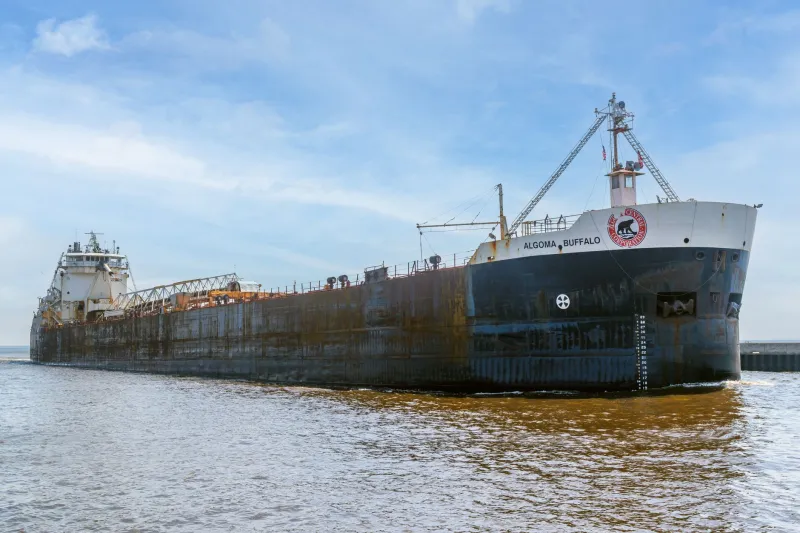
The St. Lawrence Seaway, jointly managed by Canada and the United States, accommodates vessels up to a specific dimensional constraint known as the "Seaway-max" standard: approximately 225 metres in length, 23.8 metres in beam, and 7.9 metres in draft. These dimensions exclude the ultra-large container vessels that dominate transoceanic trade, but they comfortably accommodate a class of smaller general cargo, bulk, and project cargo vessels that operate on shorter-haul routes from Europe, the United Kingdom, and the eastern Atlantic.
The seaway's port infrastructure includes major facilities at Montréal, Québec City, Trois-Rivières, Port Colborne, Hamilton, Toronto, Windsor, Thunder Bay, and several smaller terminals in between. Each serves distinct cargo categories and regional distribution functions. Together, they form a distributed entry network that allows importers to select a port of discharge based on proximity to their actual point of consumption rather than proximity to a coastal gateway.
The Core Economic Argument: Eliminating the Inland Leg
For an importer based in Hamilton, Ontario, the traditional routing through the Port of Vancouver involves a transcontinental rail or trucking segment of roughly 4,400 kilometres. Even with competitive intermodal rates, that inland movement adds both cost and transit variability to the supply chain. A routing that delivers cargo directly to Hamilton via the Seaway eliminates that segment entirely.
The arithmetic is not always straightforward. Seaway-routed vessels typically carry smaller cargo volumes, which can affect per-unit freight rates relative to the economies of scale available on large transoceanic vessels calling at Vancouver. Ocean freight rates from European origin ports to Seaway destinations are often more competitive than rates from Asia, reflecting the shorter ocean distance involved.
For importers sourcing from Europe, the United Kingdom, the Mediterranean, or West Africa—trade lanes that are frequently underweighted in Canadian sourcing strategies—the Seaway routing can deliver both cost and time advantages that coastal alternatives cannot match.
Which Product Categories Benefit Most
Not every cargo type is equally suited to inland waterway routing. The Seaway's dimensional constraints and the vessel types that operate within it favour certain commodity profiles.
Project and heavy lift cargo is among the strongest beneficiaries. Large industrial equipment, power generation components, and infrastructure materials that cannot be efficiently containerised move well on Seaway vessels, and the ability to discharge directly at an inland industrial port eliminates the risk and expense of oversized load trucking across provincial highways.
Break-bulk and general cargo from European manufacturers—industrial components, steel products, paper and forestry inputs, and specialised machinery—has historically moved through the Seaway and continues to do so where vessel schedules and cargo volumes align.
Containerised goods in moderate volumes can benefit from Seaway routing where the origin port and destination market align favourably. Importers receiving regular shipments from Northern Europe to Ontario or Québec distribution centres should evaluate whether direct Seaway service offers a net advantage over the Halifax or Vancouver gateway alternatives.
Agricultural and bulk commodities represent the Seaway's traditional strength. Grain, fertiliser, salt, and similar bulk products move through the corridor in substantial volumes, and the port infrastructure supporting these categories is well established.
Navigating the Limitations
The Seaway is not without operational constraints that importers must factor into their planning.
The most significant is seasonal closure. Ice conditions in the upper St. Lawrence and Great Lakes typically force the Seaway to close for approximately three months each winter, generally from late December through late March. Importers who rely on Seaway routing must either maintain sufficient inventory to bridge the closure period or maintain alternative routing arrangements for winter months.
Vessel frequency on Seaway routes is lower than on major transoceanic lanes. Unlike the daily or near-daily sailings available from Shanghai or Rotterdam to Vancouver, Seaway services typically operate on weekly or bi-weekly schedules at best, which demands greater planning lead times and reduces the routing's suitability for time-sensitive or just-in-time supply chains.
The pool of carriers and freight forwarders with deep Seaway expertise is smaller than in the major coastal markets. Importers who are new to the corridor should invest time in identifying logistics partners with genuine operational experience on these routes rather than treating it as a standard ocean freight transaction.
Strategic Positioning for Central Canadian Importers
The importers who are gaining the most from inland waterway strategy are not simply substituting one routing for another. They are using the Seaway as one component of a deliberately diversified supply chain architecture—maintaining coastal gateway relationships for high-volume, Asia-sourced goods while routing European and Atlantic-origin cargo directly to interior ports.
This approach reduces exposure to congestion events at any single gateway, shortens the inland distribution leg for a meaningful portion of their import volume, and in some cases opens access to European suppliers who were previously uncompetitive on a landed-cost basis.
For Canadian importers whose operations are anchored in Ontario, Québec, or the Prairie provinces, the question is no longer whether the Seaway warrants consideration. It is whether the competitive cost of ignoring it has become too high to sustain.