Terminal Turbulence: What Canadian Importers Must Know About Shifting Port Operations in 2025
When the Ground Shifts Beneath the Dock
In ocean freight, stability is rarely guaranteed. Vessel schedules fluctuate, weather intervenes, and geopolitical pressures ripple across trade lanes with little warning. Yet for many Canadian importers, one of the most underappreciated sources of operational disruption sits not on the water, but on the dock itself: changes in terminal operators and port authority management structures.
Throughout 2024 and into 2025, several of Canada's principal marine terminals have undergone meaningful transitions — from operator consolidations and lease renegotiations to capital reinvestment programmes that temporarily reduce handling capacity. For importers whose supply chains depend on precise delivery windows, these developments carry real financial consequences. Delays at the terminal translate into demurrage charges, inventory shortfalls, and strained relationships with domestic customers.
Understanding the landscape — and positioning your business to respond to it — is now as essential as negotiating a competitive ocean freight rate.
What Has Been Changing at Canadian Terminals
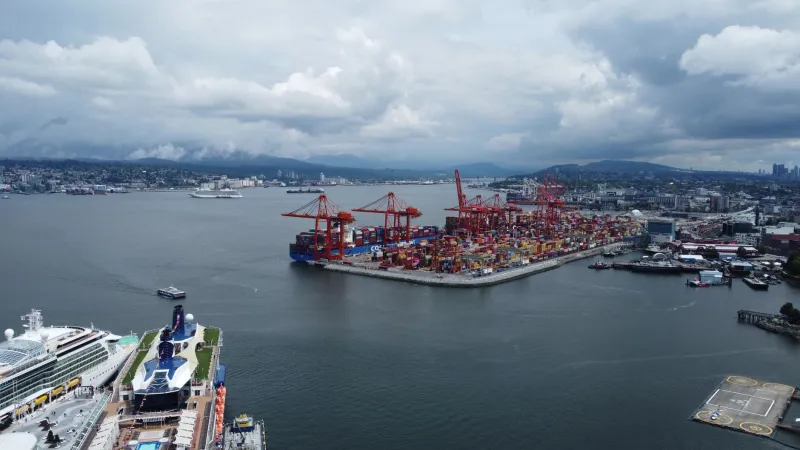
The Port of Vancouver, Canada's largest and busiest marine gateway, has continued to navigate the long-term implications of terminal reconfiguration at Deltaport. DP World's ongoing investment in the Roberts Bank Terminal 2 expansion project, while ultimately a capacity-positive development, has introduced phased construction timelines that affect berth availability and yard operations at the existing facility. Importers routing containerised cargo through Deltaport have, at various points, encountered extended dwell times and revised vessel windows as infrastructure work progresses alongside live operations.
At the Port of Montreal, the competitive dynamics between terminal operators have drawn renewed attention following the conclusion of longstanding lease arrangements and the subsequent repositioning of container handling responsibilities. The Montreal Gateway Terminals Partnership has remained the dominant operator, but the port's broader strategic planning — including efforts to accommodate larger vessel classes and expand cold-chain capacity — has introduced periods of operational recalibration that affect throughput predictability.
On the East Coast, the Port of Halifax has seen growing volumes as Canadian importers seek alternatives to congested West Coast gateways, as explored in earlier Ocean Impex Canada analysis. This growth, while strategically advantageous, has placed new demands on terminal operators at Halterm and Cerescorp, with service quality becoming an increasingly important differentiator for importers choosing between routing options.
Each of these examples illustrates a common thread: terminal-level changes, even when strategically sound in the long run, introduce short-term uncertainty that importers must actively manage.
The Risk of Single-Operator Dependency
Many Canadian importers, particularly those in the mid-market segment, have historically concentrated their ocean freight activity through a single terminal at a single port. This approach simplifies logistics coordination and can yield volume-based advantages in carrier negotiations. However, it also creates a concentrated point of failure.
When a preferred terminal experiences a labour disruption, equipment failure, or operational transition, importers with no alternative routing face a stark choice: absorb the delay or pay premium rates to reroute cargo at short notice. Neither option is cost-neutral, and neither reflects a resilient procurement posture.
Diversifying terminal partnerships — maintaining active relationships and booking histories with operators at more than one port — provides a structural buffer against this exposure. It requires greater coordination effort upfront, but the operational insurance it provides is substantial.
Assessing Operational Risk Before It Materialises
A proactive risk assessment framework should be part of every Canadian importer's annual logistics review. When evaluating terminal-level risk, consider the following dimensions:
Operator stability: Is the terminal operator subject to pending lease renewals, ownership transitions, or known financial pressures? Industry publications, port authority announcements, and freight forwarder intelligence are all useful inputs.
Infrastructure investment cycles: Terminals undergoing significant capital works — berth deepening, crane procurement, yard automation — typically experience transitional capacity constraints. Timing sensitive shipments around these windows reduces exposure.
Labour relations history: Terminals with a pattern of labour disputes warrant particular attention. While predicting industrial action is inherently difficult, monitoring collective bargaining timelines and the general tenor of labour negotiations provides advance warning.
Vessel service coverage: Assess how many ocean carriers call at your preferred terminal. A terminal served by a single alliance or a narrow set of carriers amplifies your vulnerability if service is withdrawn or rerouted.
Negotiating Flexibility Into Your Service Agreements
Beyond risk assessment, the structure of your service agreements with freight forwarders, carriers, and customs brokers can meaningfully affect your ability to respond when terminal disruptions occur.
When renewing or renegotiating contracts, consider including explicit provisions for alternative routing at no penalty when terminal-level disruptions exceed a defined threshold — typically measured in days of delay. Carriers and forwarders may resist such clauses, but in a market where service reliability is a differentiating factor, well-prepared importers have leverage to negotiate.
It is also worth establishing pre-approved alternative routings with your logistics partners before a disruption occurs. Agreeing in advance on secondary port options, inland rail connections, and customs processing alternatives means that when a terminal issue arises, your team can act within hours rather than days.
Building Intelligence Into Your Supply Chain Planning
One of the most effective tools available to Canadian importers is simply better information, gathered earlier. Terminal operators and port authorities publish operational advisories, capital project timelines, and service bulletins — but these communications are easily overlooked amid the volume of day-to-day logistics correspondence.
Designating a specific team member or external partner to monitor port authority communications for your key gateways can provide material advance notice of conditions that will affect your shipments. Ocean Impex Canada's clients benefit from ongoing market intelligence as part of their service relationship, ensuring that terminal-level developments are surfaced and incorporated into shipment planning before they become costly surprises.
Freight forwarders with deep terminal relationships are also a valuable source of ground-level intelligence. A forwarder who speaks regularly with terminal operations staff will often know about emerging capacity constraints or procedural changes before they are formally announced.
Positioning for Resilience in an Uncertain Operating Environment
The changes occurring at Canadian terminals in 2025 are not signs of a system in crisis — they are, in many respects, the natural consequence of a port infrastructure network adapting to growing trade volumes, evolving vessel sizes, and shifting global trade patterns. The long-term trajectory for Canadian marine trade capacity is broadly positive.
However, adaptation takes time, and the transitional periods it creates are real. For Canadian importers, the appropriate response is not alarm but preparation: a clearer understanding of where operational risks are concentrated, a more deliberate approach to terminal and port diversification, and service agreements that preserve flexibility when circumstances change.
In ocean freight, the businesses that absorb disruption most effectively are rarely those that avoided it through luck. They are those that anticipated it through planning.