Ocean Impex Canada Connecting Canada to Global Markets by Sea

Ocean Impex Canada

Connecting Canada to Global Markets by Sea

Latest Articles

Closer to Home, Stronger at the Bottom Line: Why Canadian Importers Are Turning to Nearshore Sourcing
Logistics Strategy

Closer to Home, Stronger at the Bottom Line: Why Canadian Importers Are Turning to Nearshore Sourcing

As global supply chain disruptions continue to erode margins and test the patience of Canadian B2B importers, a growing cohort of mid-market companies is discovering a compelling alternative: sourcing closer to home. Mexico, Central America, and the Caribbean are emerging as strategically sound origins that combine shorter ocean transit times, reduced carrying costs, and simplified compliance—often delivering measurable ROI within 12 to 18 months.
Atlantic Advantage: How Canada's East Coast Ports Are Quietly Reshaping Import Strategy in 2025
Logistics Strategy

Atlantic Advantage: How Canada's East Coast Ports Are Quietly Reshaping Import Strategy in 2025

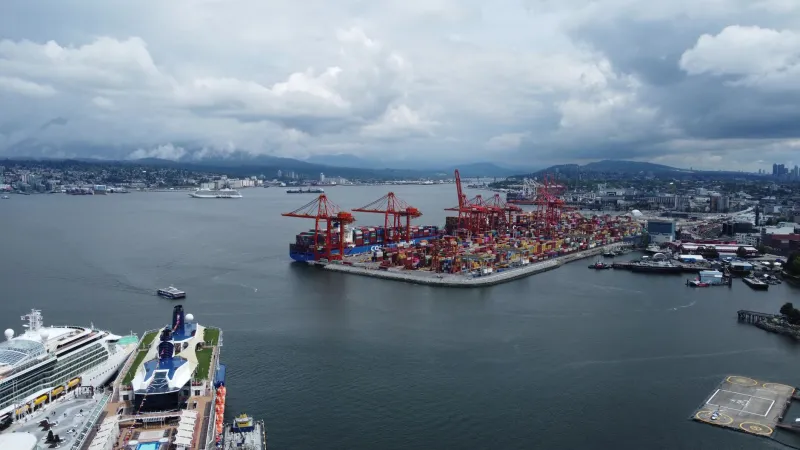
As West Coast port congestion and cross-border uncertainty continue to strain traditional supply chains, a growing number of Canadian importers are discovering the strategic value of Halifax and Montreal as primary ocean freight gateways. This analysis examines the operational, financial, and competitive dimensions of shifting volume to Canada's Atlantic seaboard in 2025.

Caught in the Crossfire: How Canadian Importers Can Protect Their Supply Chains from U.S. Tariff Turbulence
Industry Analysis

Caught in the Crossfire: How Canadian Importers Can Protect Their Supply Chains from U.S. Tariff Turbulence

Shifting U.S. trade policy has placed Canadian importers in a precarious position, forcing difficult decisions about sourcing, routing, and cost absorption. This guide examines how tariff volatility ripples through ocean freight operations and offers a structured framework for assessing exposure and building resilience. From supplier diversification to transshipment strategy, the path forward demands deliberate planning rather than reactive improvisation.

Small Shipments, Big Ambitions: How Canadian SMEs Are Using LCL Ocean Freight to Compete on the World Stage
Logistics Strategy

Small Shipments, Big Ambitions: How Canadian SMEs Are Using LCL Ocean Freight to Compete on the World Stage

Less-than-containerload shipping has long been considered a compromise—a fallback for businesses that cannot fill a full box. But a growing number of Canadian small and mid-market exporters are discovering that LCL is not a limitation; it is a strategic tool. This article explores how LCL ocean freight is levelling the playing field, what the real cost comparison with FCL looks like, and why advances in cargo tracking are making LCL more transparent and reliable than ever before.

Riding Out the Swells: Proven Tactics for Canadian Importers to Stabilise Ocean Freight Costs in a Volatile Market
Logistics Strategy

Riding Out the Swells: Proven Tactics for Canadian Importers to Stabilise Ocean Freight Costs in a Volatile Market

Ocean freight rate volatility has become one of the most persistent financial risks facing Canadian B2B importers, with spot rates capable of shifting dramatically within a single quarter. Understanding the structural forces driving these cycles—and deploying the right contractual and operational tools to counter them—can mean the difference between protected margins and costly surprises. This article outlines a practical framework for building pricing resilience into your supply chain for 2025

When the Ship Docks, the Real Work Begins: Closing the Gap Between Ocean Freight and Inland Delivery for Canadian Importers
Industry Analysis

When the Ship Docks, the Real Work Begins: Closing the Gap Between Ocean Freight and Inland Delivery for Canadian Importers

Most Canadian importers invest considerable effort in securing competitive ocean freight rates, yet a significant share of those savings evaporate the moment containers arrive at port. The disconnect between ocean freight planning and domestic drayage, warehousing, and final delivery is a pervasive and underexamined problem that quietly erodes supply chain performance. This piece makes the case for treating inland logistics as an inseparable extension of your ocean freight strategy—not an aftert

Container Consolidation as a Profit Strategy: What Mid-Market Canadian Importers Need to Know
Logistics Strategy

Container Consolidation as a Profit Strategy: What Mid-Market Canadian Importers Need to Know

For mid-market Canadian importers, the difference between a healthy margin and a squeezed one often comes down to how efficiently cargo moves through a container. Consolidation strategies — when executed with the right partners and timing — can dramatically reduce per-unit freight costs and restore competitiveness against larger rivals. This guide breaks down the tactics, trade-offs, and forwarder relationships that make smarter ocean freight consolidation a genuine business advantage.

Shipping Green to Win Big: How Canadian Exporters Are Turning Sustainability Into a Competitive Edge
Industry Analysis

Shipping Green to Win Big: How Canadian Exporters Are Turning Sustainability Into a Competitive Edge

ESG accountability is no longer a corporate afterthought — for Canadian exporters, it is rapidly becoming a prerequisite for accessing premium international markets. As European, American, and Asia-Pacific buyers tighten their supply chain environmental requirements, Canadian B2B companies that embed low-carbon ocean freight into their logistics strategy are gaining measurable market share. This analysis examines the business case, the available tools, and the practical steps to make green shipp

Beyond Asia: The Case for Rethinking Where Canadian Importers Source Their Ocean Freight
Industry Analysis

Beyond Asia: The Case for Rethinking Where Canadian Importers Source Their Ocean Freight

Canada's import supply chains have long depended heavily on transpacific ocean routes from Asia, but 2025 is exposing the structural vulnerabilities of that concentration. Geopolitical instability, shifting cost dynamics, and the growing appeal of nearshoring are prompting forward-thinking Canadian importers to evaluate alternative trade corridors. This analysis examines whether route diversification is a defensive necessity or an emerging competitive advantage.

Clearing the Compliance Hurdle: A Canadian Exporter's Guide to Staying Ahead of International Trade Regulations
Logistics Strategy

Clearing the Compliance Hurdle: A Canadian Exporter's Guide to Staying Ahead of International Trade Regulations

Evolving trade regulations are creating hidden delays and unexpected costs for Canadian ocean freight exporters who are unprepared. From tariff classification errors to origin documentation gaps, compliance missteps can derail shipments and damage commercial relationships. This guide outlines the key regulatory pressure points and practical measures B2B exporters must address to keep cargo moving.

Gateway Decisions: How Canadian Businesses Can Gain a Competitive Advantage Through Strategic Port Selection in 2025
Industry Analysis

Gateway Decisions: How Canadian Businesses Can Gain a Competitive Advantage Through Strategic Port Selection in 2025

The port through which your cargo enters or exits Canada is not merely a logistical detail—it is a strategic decision that affects transit times, freight costs, supply chain resilience, and your company's ability to serve customers across a vast and geographically diverse country. In 2025, Canadian businesses have more gateway options than ever, and the differences between them are consequential.

Beyond the Base Rate: Decoding the True Cost of Ocean Freight for Canadian Importers
Logistics Strategy

Beyond the Base Rate: Decoding the True Cost of Ocean Freight for Canadian Importers

The container rate quoted by your freight forwarder is rarely the final figure that appears on your invoice. For Canadian importers, a constellation of surcharges, handling fees, and administrative costs can inflate the true landed cost by 30 to 60 percent above the base ocean freight price. Understanding each component is not merely a financial exercise—it is a strategic imperative.

Beating the Bottleneck: A Strategic Playbook for Navigating Canadian Port Congestion in 2024–2025
Logistics Strategy

Beating the Bottleneck: A Strategic Playbook for Navigating Canadian Port Congestion in 2024–2025

Port congestion at Vancouver, Montréal, and Halifax continues to pose real operational risks for Canadian importers and exporters operating on global schedules. Smart traders are not simply waiting for conditions to improve — they are deploying deliberate strategies to reduce dwell time, secure capacity, and route around bottlenecks before they materialise. This practical guide outlines the approaches that experienced international traders are using right now to stay ahead of the delays.

From Skies to Seas: Why Canadian Exporters Are Rethinking Freight Mode Strategy After 2024
Industry Analysis

From Skies to Seas: Why Canadian Exporters Are Rethinking Freight Mode Strategy After 2024

Rising airfreight costs and mounting supply chain vulnerabilities have prompted a significant shift in how Canadian manufacturers and exporters move goods across international borders. Ocean freight is emerging as the preferred logistics solution for businesses prioritising cost discipline and operational resilience. This investigative analysis examines the forces driving that transition and what B2B decision-makers need to know before restructuring their freight strategies.